
Freshly Milled Flour Facts
Freshly milled whole grains are among the most nutrient-dense foods you can include in your diet.
Because they retain all 3 parts of the grain kernel (bran, germ, and endosperm) and are used shortly after milling, freshly milled flours offer a powerful combination of fiber, vitamins, minerals, healthy fats, and plant compounds that support overall health (and are largely unavailable from any commercial store).
For families focused on health, simple living, or homemade baking, freshly milled grains are one of the most impactful upgrades you can make in your kitchen.
Don’t believe me? Keep reading for everything you want to know (maybe more) about freshly milled flour!

What Makes Freshly Milled Whole Grains Unique?
A whole grain contains three parts:
- Bran (fiber-rich outer layer)
- Germ (nutrient-dense core with healthy fats and vitamins)
- Endosperm (starchy energy source)
When grains are refined (think All-Purpose flour from the grocery store), the bran and germ are completely removed, taking most of the nutrients with them.
Even the “whole grain” flour on your grocery shelves has only a fraction of the bran and germ added back to the endosperm… not to mention it was likely milled weeks before, meaning nearly all the nutritional value is gone.
Freshly milled whole grains, on the other hand, preserve all three components, delivering significantly higher levels of vitamins, minerals, and antioxidants.
Nutritional Benefits of Whole Grains
Across nearly all varieties, whole grains provide the following health benefits.
1. High Dietary Fiber
- Supports digestion and gut health
- Helps regulate blood sugar
- Promotes fullness and weight management
High-fiber diets are linked to lower risks of heart disease, type 2 diabetes, and obesity.
2. Plant-Based Protein
- Essential for tissue repair and energy
- Especially important in plant-based diets
3. Rich in Vitamins + Minerals
- B vitamins (energy metabolism)
- Magnesium (muscle and nerve function)
- Iron (oxygen transport)
- Zinc (immune support)
4. Antioxidants + Phytonutrients
- Help reduce inflammation
- Protect against chronic disease
In addition, regular consumption of whole grains is associated with reduced risk of stroke, heart disease, and certain cancers — not too shabby!
Nutritional Profiles of Popular Freshly Milled Grains
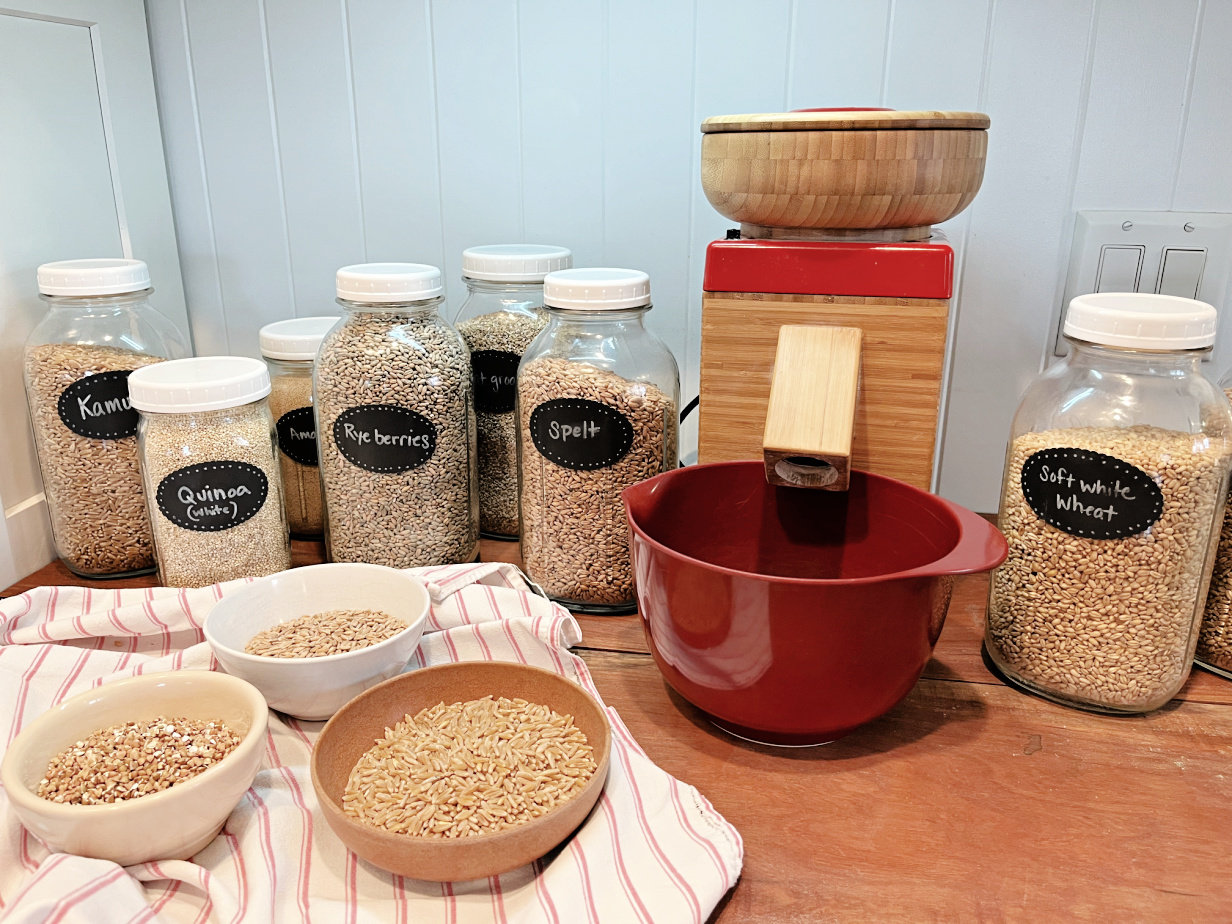
1. Whole Wheat (Hard + Soft, White + Red)
The most common baking grain, whole wheat has a mild, slightly nutty flavor and works well in everything from sandwich bread to muffins. It’s reliable, versatile, and a great starting point for fresh milling.
Key nutrients:
- High in fiber (especially insoluble fiber)
- Rich in B vitamins and iron
- Contains antioxidants in the bran
Benefits:
- Supports digestive health
- May reduce the risk of colon cancer and improve gut bacteria
2. Spelt (Ancient Grain)
An ancient grain with a slightly sweet, nutty flavor and a softer texture than modern wheat. Spelt is often easier to work with in baking and can produce light, tender breads.
Key nutrients:
- Manganese (very high)
- Magnesium, phosphorus, iron, zinc
- B vitamins
Benefits:
- Slightly higher protein and minerals than modern wheat
- Good for heart health and blood sugar control
- High antioxidant capacity
3. Rye
A hearty grain with a bold, earthy flavor. Rye flour creates dense, moist breads and is great when combined with other varieties to give more flavor.
Key nutrients:
- Fiber-rich (especially arabinoxylans)
- B vitamins and iron
Benefits:
- Promotes satiety (keeps you full longer)
- May improve blood sugar control
- Supports gut health
Rye is often denser and more nutrient-dense than wheat.
4. Barley
A soft, slightly chewy grain with a mild, nutty flavor. While not as commonly used alone in baking, it blends well with wheat flour for added nutrition and depth. Boiled barley is also a great addition to soups, stews, and even on salads.
Key nutrients:
- Extremely high in fiber (especially beta-glucan)
- Selenium, magnesium
Benefits:
- One of the best grains for lowering cholesterol
- Supports digestive health
- Helps regulate blood sugar
5. Einkorn (Ancient Grain)
One of the oldest forms of wheat, einkorn has a rich, buttery flavor and golden color. It’s less processed than modern wheat and tends to create softer, more delicate baked goods.
Key nutrients:
- Higher protein than modern wheat
- Rich in lutein (an antioxidant for eye health)
- More bioavailable minerals
Benefits:
- Easier to digest for some people
- Less processed genetically than modern wheat
6. Kamut (Ancient Grain)
A large, ancient grain known for its rich, buttery taste and high protein content. Kamut (also referred to as Khorasan Wheat) adds a slightly sweet flavor and works well in breads, pastas, and rustic baked goods.
Key nutrients:
- High in protein
- Rich in selenium and zinc
Benefits:
- Strong anti-inflammatory properties
- May support heart health and immune function
7. Oats (Gluten Free)
Naturally mild and slightly sweet, oats are often rolled but can also be milled into flour. They add softness and moisture to baked goods and are great for cookies, pancakes, and quick breads.
Key nutrients:
- Beta-glucan (a special soluble fiber)
- Iron, magnesium, zinc
Benefits:
- Helps lower cholesterol
- Stabilizes blood sugar
- Supports gut health
Oats are especially valuable for heart health due to their soluble fiber content.
8. Brown Rice (Gluten Free)
A gluten-free grain with a neutral, slightly nutty flavor. Brown rice flour is light and works well in gluten-free baking when combined with other flours. NOTE: White rice is not considered a “whole grain” as the bran and germ are removed.
Key nutrients:
- Magnesium
- Selenium
- Moderate fiber
Benefits:
- Naturally gluten-free
- Supports steady energy release
- Easy to digest compared to wheat grains
9. Millet (Gluten Free)
A small, mild grain with a slightly corn-like flavor. Millet is naturally gluten-free and adds a light texture to baked goods.
Key nutrients:
- Magnesium
- Phosphorus
- Antioxidants
Benefits:
- Gluten-free
- Supports heart health
- Easy on digestion
10. Quinoa (Gluten-free)
Technically a seed, quinoa has a slightly earthy, nutty flavor and is packed with protein. It’s often used in gluten-free baking blends for added nutrition.
Key nutrients:
- Complete protein (all essential amino acids)
- Iron, magnesium
Benefits:
- Excellent for plant-based diets
- Supports muscle repair and energy
Why Fresh Milling Matters Nutritionally
Freshly milled flour offers several advantages:
1. Preserved Nutrients
The germ contains healthy fats and vitamin E, which can oxidize and degrade over time. Fresh milling helps retain these nutrients.
2. Better Flavor = More Whole Grain Consumption
Fresh flour has a richer, nuttier taste—encouraging more whole grain intake.
3. Full Fiber Retention
No removal or recombination of bran and germ—everything stays intact.
4. Potentially Higher Antioxidant Activity
Fresh grains maintain more of their natural protective compounds.
Baking with Freshly Milled Flours
Baking with freshly milled flours has a bit of a learning curve, but it’s totally worth it!
If you’d like to dive into the delicious world of freshly milled flour, here are my best tips for getting started!